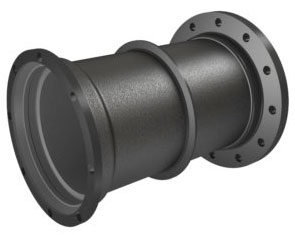
Ductile Iron Pipes and Fittings
Ductile iron pipes are strong, durable pipes made from ductile cast iron—a type of cast iron known for its flexibility and toughness. The key feature of ductile iron is the spheroidal (nodular) shape of the graphite within the iron, which gives the material its ductility and strength. This makes ductile iron pipes highly resistant to cracking and able to withstand high internal pressures and external loads, such as those caused by soil movement or heavy traffic above ground.
These pipes are typically manufactured using centrifugal casting, and they often have protective internal linings (such as cement mortar or epoxy) and external coatings to prevent corrosion and extend their lifespan. Ductile iron pipes are widely used for water supply, wastewater, gas, and industrial applications due to their reliability, pressure resistance, and long service life.
Ductile iron fittings are components used to connect, branch, or change the direction of ductile iron pipes within a piping system. These fittings include elbows, tees, reducers, couplings, and flanges, and are manufactured from the same ductile iron material as the pipes. They are designed to ensure leak-tight connections and to withstand the same pressures and environmental conditions as the pipes themselves.
Fittings are available in a wide range of sizes and jointing options to suit different applications, including potable water, sewerage, and industrial systems. Advanced surface treatments, such as fusion-bonded epoxy or Dacromet coatings, are often applied to fittings to enhance their performance and resistance to corrosion in various environments.